
Who am I?
June 21, 2013
As many of my twitter followers (@eariess) may know I appear on a weekly radio show in Sonoma, CA. As the newest member of the cast, they (Jim and Rick) decided to investigate the interloper (me) for their listeners.
But I also wrote a short note for the hosts newsletter, which I thought I’d reproduce here. (My nickname is Ace–don’t ask why, it’s a long story):
Jim, Rick,
Thanks for the chance to talk to the good folks of Sonoma.
Of course, on the way home, I thought of all the stuff I should have said:
Who is ace?
I am a husband devoted to the love of my life- the Queen- the world’s first Concierge Wellness Consultant
I am a step-dad to two women, who despite my meddling in 10 years of their life, turned out pretty well.
I am, and will forever be, a journalist, newsman and writer, even if I never write the great American novel.
I am a coach who takes pride in helping my clients find the path they want.
I am a photographer, although digital imaging, as it’s called today, will never have the same ring.
I am a gardener, who takes pride in my 100 roses, and the beauty I try to bring to the world.
I am my father’s son, and hope that they have a radio up where he is, so he can listen to me and my good friends entertain a small corner of California.
Thanks,
Ace
You can download the podcast to the show –part 1, the first hour or part 2 ,the second hour.
BTW: The weekly newsletter is worth reading, so if you want to receive it on a regular basis, write to Thisweekinsonoma@aol.com just note that Ace suggested you sign up.

So, Why Does the World Exist?
May 10, 2013
I admit that I started reading Jim Holt’s “Why Does the World Exist?” as penance. Many years ago, Douglas Sturm, my political theory seminar leader at Bucknell University, tried to introduce me to Plato.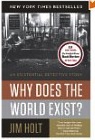
Seems I never had time for the deep thinking required and I almost flunked.
So when I saw Mr. Holt’s book on several 10-best lists last year, I decided to get it another try, for Professor Sturm.
I guess it took 43 years before my brain could wrap itself around the concepts but I’m glad Mr. Holt succeeded.
I would recommend this book for anyone who wants to spend some time contemplating our world’s oldest question, but particularly journalists who get caught up in the daily routine of facts, figures and political hyperbole.
Holt’s writing is erudite, easy to read and understand but filled with concepts that most of us never consider, or try to avoid.
At the same time, like any good journalist, he examines the question posed in his title from every conceivable angle. No just as a personal essay, but by interviewing leaders in the field and then explaining what they seem to be saying.
Others have called his book a “detective story” but, like his readers, who want concrete answers, he accepts or rejects various arguments along the way. He reaches his own conclusions, which we are free to accept, or not, and manages to humanize the whole effort with references to his own life and his experience with death.
The journey is interesting, entertaining and, if Professor Sturm is reading this, enlightening. I’m finally starting to understand some of what Plato was telling us. Thanks for whetting my appetite.
We Are All Dishonest
October 30, 2012
I just finished Dan Ariely’s book on honesty – “The (Honest) Truth About Dishonesty,” – and while I admit that it could make you feel a bit uncomfortable about trusting anyone, it may be an exercise in proving the obvious.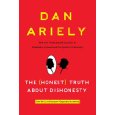
Ariely is among a group of behavioral economists who try to prove, or disprove, theories based on scientific experimentation. The combination does not always produce the kind of clear conclusions you might like, but his writing is entertaining, comprehensible and always interesting.
Basically he concludes that everyone is corruptable given the right circumstances. The trick is to keep the circumstances to a minimum and take precautions. But then, anyone who has ever filled out a tax return, probably knows that.
My favorite section includes his admonition on the slippery slope that even small rationalizations can create. His insights involving politicians, or CEO’s who claim that they are not influenced by small ‘inconsequential’ lapses in moral standards, is particularly revealing. His observation is best summed up by Queen Gertrude in Hamlet, “Methinks the lady doth protest too much.” A free lunch from a lobbyist may be minor, but it’s probably just the tip of the iceberg.
I do have a couple of reservations about Ariely’s methodology. First, it is largely based on experiments with college students and even he tacitly admits this group may not be representative of the general population.
Second, you have to accept some of his underlying assumptions about what drives human behavior, to trust his conclusions. For example, in discussing medical treatment and evaluating whether true need or profitability is the true driver, he cites dentists who recommend more expensive enamel fillings when less-expensive mercury will do. That enamel is the more expensive option proves the dentist are motivated by greed, Areily claims, since they recommend that option more frequently than mercury.
He may be right, but I think he uses a bad example, because there is more to the enamel vs. mercury debate than just appearance. There is also a safety issue.
But, all in all, it certainly is worth taking a look at Ariely’s work, so you will understand why you, and everyone else, can’t help being dishonest.
What’s Going On in Your Brain
September 21, 2012
I finished more books on the brain over the last few weeks. Actually I finished three, but my friends tell me one doesn’t count. You can decide for yourself.
I won’t pretend to give them all thorough reviews, but I will make a brief comment on each. I think they are all worth reading of you want some insight into what’s going on in your mind as you wander through life.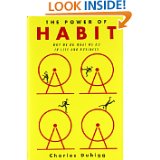
Charles Duhigg’s “The Power of Habit,” was interesting for the first 125 pages (out of 290). He does a great job explaining how habits develop, but he leaves the specifics about what to do about it until the appendix. He offers a general theory and solution but he stops just short of a full answer. He uses his own habit as an example of how to break a habit. For my money that’s why people buy the book. A good part of the rest of the book was really marketing advice, and while it was interesting, I’m not sure it was ‘on point,’ as they say.
Lawrence Rosenblum’s “See What I’m Saying,” is a great look at neuroplasticity – the brain’s capacity to expand the functionality in one area, to make up for deficits in others. Rosenblum is a psychologist and researcher, not a writer, so his style is exactly the opposite of Duhigg.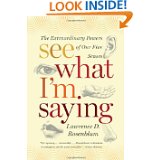 Where Duhigg is light and easy to read, Rosenblum can be a bit more theoritical or professorial. There’s nothing wrong with it, but you have to work much harder to find the nuggets. But his explanation of how hearing makes up for lost eyesight, or how touch and taste and smell can evolve, to help out when other senses are lost is fascinating.
I also recently read Jonah Lehrer’s “Imagine,” and while I don’t condone his creative quotes from Bob Dylan, he does make some interesting points about the creative process. A good friend of mine told me , “you can never know what he’s making up.” Which is is quite valid – particularly for a journalist.  Maybe I’m just reflecting my own cognitive dissonance -believing what I want to believe – but I don’t think anyone could conjure all the situations and theories he presents out of nothing. In that vein, I’ve decided not to ask Amazon for my money back, even though they offered.
Shuttle Comes to the Bay Area
Endeavour, on its way to Los Angeles, made a few trips around the Bay Area. One was just about over our home. I don’t think any other explanation is needed.





Happiness is Everywhere
April 5, 2012
Suddenly, it seems that we are consumed with the search for one of our ‘inalienable rights.’ It’s not that Americans just rediscovered the Declaration of Independence, or Will Smith’s 2006 movie, but rather, it seems to be the latest social science trend.
Consider it the replacement for behavioral economics the science that became popular after the book Freakonomics tried to explain how economics could explain human behavior. For a few years there was a new book out every month explaining why humans are irrational and how we could be led to do anything with the right incentive.
Now, it seems that happiness, and the apparently futile search for it, has reached the top of the grad student research list. Last month Harvard Business Review (subscription required) focused a whole issue on employee happiness; two weeks ago I received a brochure advertising a full day seminar offered in 8 convenient locations guaranteed to provide me with “effective ways to measure happiness.”
Daniel Gilbert’s “Stumbling on Happiness,” a 2006 best seller may have sparked the recent interest. Gilbert’s book is a well-written and very interesting explanation of how humans define happiness, what it is or is not, and a slightly depressing conclusion that the human mind may never allow us to truly understand what will make us happy. He offers some solace that, at least now that we understand how the human mind works, we will know why we can never find happiness.
Interestingly the writing style and reasoning of the book is quite similar to many of the behavioral economics books, such as “Nudge” or Dan Ariely’s “Predictably Irrational.”
Andrew Weil’s “Spontaneous Happiness,” takes a different approach, offering suggestions for helping us find happiness. His is a less scientific approach and is more a lengthy essay on his own observations about happiness. He offers a number of suggestions of helpful methods to help his readers achieve a state of happiness.
If you are familiar with Dr. Weil’s work you will not be surprised that his suggestions run range from yoga and mindfulness meditation to more secular pursuits such as social activities or laughter. He even offers an ‘8-week Program for Optimal Well Being.”
Dan Buettner, author of “Blue Zones’ which explores circumstances surrounding the lives of the world’s oldest citizens has offered “Thrive – Finding Happiness the Blue Zones Way.” He investigates (and I use that term very loosely) the places around the planet judged to include the happiest populations according to annual surveys.
With apologies to Walt Disney, among the happiest places on earth appear to be parts of Mexico, Denmark, Singapore and San Luis Obispo, California. Even Buettner doesn’t seem to believe that any place in Mexico could be judged happy given the violence, but he doesn’t let that stop him from interviewing the population in an attempt to compile a list of factors that will lead to happiness.
After his trips, Buettner develops a list of “Finding Ways to Thrive” which includes items such as ‘put friends first,’ ‘grow a garden’ or ‘get into teaching.’ While many of his suggestions are valid, and some may apply to a lot of readers, his list is so long and tries to be so inclusive that it’s almost useless in trying to help anyone find happiness.
I have no idea what the answer is. Even Gilbert notes that happiness may be impossible to measure because we all use a different scale. A good friend of mine once suggested that unhappiness is caused by expectations not meeting reality. Maybe the answer lies in taking a more honest look at assessing what your own reality is. And that’s something a coach can help you figure out.
A Good Read
February 19, 2012
There are all kinds of book reviews. Those that wax poetic about sentence structure and pacing and the finer points of writing, without giving you any indication what a book is about.
Then there are those who tell you the whole story and never tell you if the book is worth buying.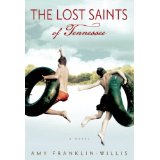
For me, book reviews should be short and to the point.
If you are looking for a good read, pick up a copy of the “The Lost Saints of Tennessee” by Amy Franklin-Willis. – a debut novel in the best Southern literature tradition.
The genre is really beside the point. I don’t really read a lot of fiction and I’m not from the South, but I can honestly say, when I got to the last page, I didn’t want the story to end. To me that’s the mark of fine writing.
It’s good to know Ms Franklin-Willis is already working on the sequel.
What Color IS your Parachute? – A Review
October 24, 2011
Dick Bolles, or Richard Nelson Bolles- as many folks know him, has been writing his ‘Parachute’ books on career development for 40 years. The latest edition of his signature series continues to be a must-read for anyone looking for a new career or the thousands of career specialists who have followed in Bolles’ footsteps.
You might think that, at 84, the internet or current events might have passed Bolles by, but his 2012 “What Color is My Parachute,’ is up-to date and filled with the same kind of useful information contained in the other 39 versions. In addition to the links I was particularly impressed with his comments about the Microsoft purchase of Skype and what it might mean for distance coaching.
You may not agree with everything he says or suggests, but he lays out sound guidance on everything from finding your mission to negotiating pay.
What you won’t find is any reference to parachutes or colors- a burden that Bolles has been saddled with, since the title of his book was first suggested. When I met Bolles recently he was careful to explain where the phrase came from – an offhand remark he once made about some Episcopal ministers who were going to be out of jobs soon – and that it really has no relationship to his lifelong work.
Bolles uses the tried and true techniques he discovered by accident 40 years ago and combines them now with web resources to create a modern tool for job hunting. His links and references, which are also available on his website, are well worth the price of the book.
They key component of his work is the self-inventory ‘Flower Exercise’ that he suggests everyone use to both define their job search and their skill set. The reality is that you don’t have to wait until you need to look for a job to use the exercise since everyone should probably do this kind of self assessment on a regular basis.
Starting the search for a new job does not just occur when you are out of work but can happen any time.
Bolles writes in a simple, folksy style that is easy to understand and very clear. There is no professional gibberish or double-speak that many professionals like to use. It’s just information, suggestions, strategies and real world common sense.
You may not use everything, but it can be a helpful foundation for self exploration as well as practical tips for interviewing and research. I have some issues with his suggestions for trying to research jobs by setting up informational interviews. I don’t think it’s as easy to do as he suggests but I would never suggest that you shouldn’t try.
Bolles, a former Episcopal minister, makes no secret of his faith and its role in his life and career. He makes no apologies, but tries to limit his faith-based approach to the ‘Pink Pages’ in the appendix but it doesn’t detract from his advice and the usefulness of the book.
Bolles also offers advice for career coaches. In fact it seems at times that his book is directed at coaches and not just the average job hunter. But in my mind that just makes it more useful. His suggestions for finding a coach are important no matter what side of the equation you are on.
One note: I bought the e-book version of the book and while it makes it much easier to get directly to the many links listed, it has made a mess of the charts and graphics. Having read other e-books I know this does not have to be the case, but it’s unfortunate. I hope it will corrected, but I plan to purchase a printed edition anyway.
In short, not matter what version you buy, read the book and you’ll be much closer to a successful career.
Dealing with Pain
September 29, 2011
I recently got over a bout of cellulitis and it brought new meaning to a book I finished a few months ago: The Pain Chronicles by Melanie Thernstrom.
Cellulitis is an inflammation or infection that can settle in a joint and cause severe discomfort until you convince it to leave. I had gradually increasing pain for three days, and couldn’t even walk for a few more, before my crack medical team figured out the problem.
The point is not my problem, but the pain. After just a few days of it, I found new insight into the observations made by Ms Thernstrom and while I would have recommended her book anyway, I would now suggest it as required reading.
If you have ever been in pain, have a friend pain, or think you may ever be in pain, I would suggest you read this book. It really focuses on chronic pain, which is anything older than 6 months, according to medical professionals, but it will give you some insight into what’s going on. I have dealt with this kind of issue in past posts, but Ms Thernstrom does a much more thorough job.
It should also give you new empathy for folks, who have chronic back, knee, leg, neck or any other kind of pain but look perfectly healthy otherwise. Medical professionals know that pain is now recognized as it’s own disease and needs to be treated separately.
As Ms Thernstrom can attest, it can cause both physical and physiological changes that are extremely difficult to reverse. Ms Thernstrom’s book is a first hand account of her own chronic pain and her attempts to deal with it. It is also a well-researched history of how society, since the ancient Greeks, have tried to deal with the concept.
Like many books written by journalists, it is easy to read, clear and lays out the issues in a logical progression.
As we all age, and encounter more and more aches and pains, in places we never knew existed, we need to understand what’s happening both physically and psychologically. Ms Thernstrom does not have all the answers and sadly, she cannot say that she found a magic cure, but she tried a number of techniques and she can at least maintain a ‘normal’ life – something that I found hard to consider as I dealt with my short battle with pain.
The book recently became available in paperback or, of course, as an e-book.
“Feel the Fear” – Dated but Worth a Read
May 19, 2011
I saw Susan Jeffers “Feel the Fear… and Do It Anyway,” mentioned on a coaching forum and thought that it might be useful for me and my clients.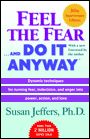
After all, the book has been around since 1987 and launched Ms Jeffers into a leading role in the self help field. Whether or not she’s the ‘Queen of self-help” as her book jacket proclaims is probably up for debate, but she was certainly a leading voice.
Her book is well written, easy to understand and filled with examples to help explain her theories. From that standpoint I wholeheartedly recommend it. From a coaching standpoint I think it has a great many ideas that can be applied to clients who may be stuck or afraid to take action.
This is particularly true of the first nine chapters where she presents the nuts and bolts of her approach with techniques and exercises designed to get people moving… in any direction… but at least off square one. Her concepts on reframing situations, decision making and dealing with issues holistically were pretty new in 1987.
I guess that’s where some of my reservation sneak in. As I read, I couldn’t help but think that somehow it all seemed a bit dated. I was reading the 20th anniversary edition, published in 2007, but it didn’t appear that many examples or theories had been updated. Not that people and their roadblocks change that much, but it could just have used some examples from something I could identify with more easily.
After all, in 1987 no-one knew what ‘www’ stood for, and Steve Jobs was running NEXT Computer, probably thinking, “I wonder how I could be more Important.”
Maybe it’s just living in the Bay Area, but I think the world has changed significantly since 1987.
Ms Jeffers’ last two chapters venture more into the spiritual realm, starting with love and trust and moving on to the ‘inner void.’ Worthwhile areas to explore but definitely a bit of a departure from the first chapters. Looking over some of the titles on her web page, it’s clear that she has gone on to expand many of the chapters to individual books.
But, “Feel the Fear…And do It Anyway,” is a great introduction and has lots of suggestions for dealing with clients who can’t seem to find the motivation to get started and I would recommend it.
Now, I just have to figure out why I wasn’t more motivated when I finished reading.