
Kensington in the Spotlight
February 22, 2015
Recently, I’ve had a few calls from friends around the country asking bluntly, “What the heck is going on in Kensington?”
For those of you who missed it, our little town has been the subject of some notoriety since it was revealed that an off-duty police officer ( and three other colleagues) drove to Reno, NV (about 3 hours) for a weekend of fun and promptly lost his gun, badge, handcuffs, and ammunition to a prostitute.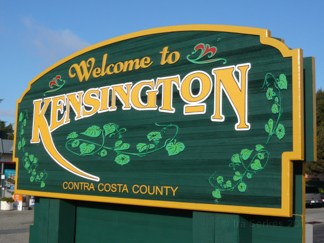
Journalistically, the best part of the story was how the gun was recovered the next day, when the woman’s pimp apparently shot himself during a dispute when he was attempting to pawn the items.
Our local police chief “investigated” the matter for 8 months but only suspended the officer when the story became public. As you might expect, the community was a bit upset at the chief’s delay. Over 250 folks turned out for a police board meeting on the issue.
He’s now our former chief, although the suspended officer is still on the force.
Kensington is a small upper-middle class community in the East Bay hills. Our major claim to fame, until now, was that Daniel Ellsberg lived here. Over 70% of the population have, not only college degrees, but advanced degrees. The community is off the beaten track, and most of us like it that way. There are no major roads that would lead anyone to come here, unless you were on the way to your home, and most of the time when you tell someone you live in Kensington the reaction is “where’s that?”
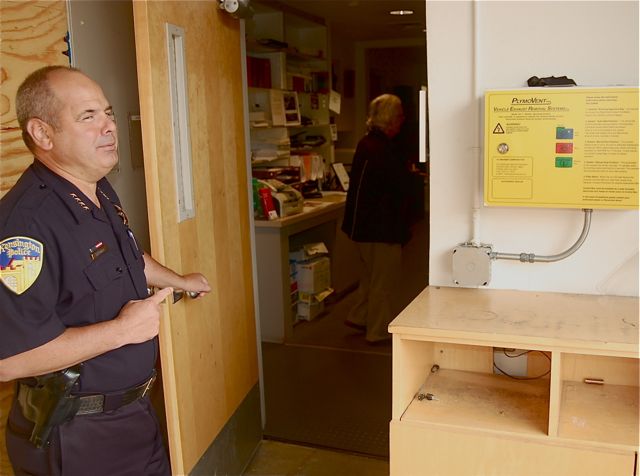
Chief Greg Harman in happier times
Plus, we pay a yearly assessment, so that we can have a police department of 10, dedicated to patrolling our streets to protect us from the rest of the world. We also have an excellent elementary school which makes this a great place to raise a family.
The spotlight that has been shining on us over the last few weeks, has been very uncomfortable.
I have no new information to reveal about what will happen next and most of you probably don’t want to know about the politics of a small, wealthy community in the Bay Area, but there are some things to note.
First, the chief and the 5-member police board to which he reports, have screwed up big time. The chief, who also acts as general manager, will no longer be serving us, and for the second time in ten years, we are looking for a new commander.
Second, a large part of the problem is based in the combination role the police chief is asked to fill. Police Chief and General Manager is just an untenable combination, which the board is finally looking into changing.
Third, a small group of dissidents is using the incident to further their own, long-standing goal of ousting the three majority board members. Additionally, they want us to combine our police force with the neighboring town of El Cerrito, which may make sense financially, but not from a public safety perspective.
This story will continue to play out over the next year. Hopefully out of the national or state-wide spotlight. My hunch is we’ll have a recall election, which will fail, and we will separate the two top posts in town, and then there will be a ballot initiative to combine our police force with our neighbor, which will also fail.
The whole battle will be quite acrimonious, and make for lots of local hand wringing, but in the end, everyone will go back to ignoring the our little town and we can all get on with our lives.

Salary Talk
October 9, 2014
Should you discuss salary at a job interview?
My answer is an unequivocal, “No,” although I admit sometimes it’s impossible to avoid.
A recent example from my practice explains why. My client recently graduated from college and was about to go out on his second job interview. (His first landed him a job offer that he turned down because of the location – but that’s a different post)
We were going over possible interview questions and he asked about salary. I gave him my standard answer and we talked about ways to deflect questions.
I explained that the purpose of an interview is to get an offer and once you have an offer that’s when you discuss salary and benefits.
“But what if they just ask directly, how much money I want?” he asked. I suggested he explain that he didn’t know the exact job responsibilities, so he could not estimate what the salary should be. The point is ,that if they have not published a salary range, you don’t want to ask for too little or too much. There are a host of negotiating techniques and strategies at play, but that’s it, in a nutshell.
After the interview he called to say, sure enough, they asked for a salary requirement and were insistent that he offer a number. None of my suggested answers put them off, so he gave them a number.
Guess what, three weeks later, he got a job offer and the salary was exactly number he mentioned. He asked if it would be improper to ask for more and I assured him that it certainly was not out of bounds. We discussed how he should approach the matter, given what he said at the interview and he told me later that he got a small boost, but it made him feel much better about taking the job.
If you want another real world example check out this from Maria Klawe President of Harvey Mudd College at a recent forum on women and pay. She admits that she left $50,000/year on the table because she accepted the job and then asked about salary.
My advice, whether you know the salary range in advance, or not, try not to offer an expected salary or you will always wonder if you left money on the table.
Unconscious Bias
September 24, 2014
A lot has been written over the last year about steps Silicon Valley companies are taking to combat bias in hiring.
In case you missed it, over 70% of the workforce at many firms, is white and male. A recent NYT article details the problem and some proposed solutions.
But I think the issue is closer to most people’s homes than they realize. A recent example helps prove my point.
My ophthalmologist, is the mother of twins , a boy and a girl. I have been seeing her for almost 15 years so I’ve followed the normal trials and tribulations of parenting.
The children are now, at 15, starting to make choices about college and careers. At my last appointment the doctor said the young man had really applied himself and was looking forward to technology/science as a career and was looking at top tech schools.
When I asked about her daughter, the doctor said she found math and science “too hard,” adding,”all my friends just want to get Liberal Arts degrees.” The doctor’s response,”Well, OK, if that’s what you want.”
I was slightly appalled, and my expression must have revealed my thoughts, because she asked, “Do you think I should have pushed her more?”
We had a lengthy discussion, in between eye chart readings. But it made me wonder how many other subtle signals the little girl had received about avoiding math and science.
It’s no surprise the Silicon Valley workforce is overwhelmingly male, if even a professional women, in a field that certainly required some science (ophthalmology), wouldn’t even urge her daughter to consider science and math because they are “too hard.”
Maybe a short visit with an unbiased career counselor/coach would help break through the peer pressure and produce a few more female engineers for the next great startup.
Sun Valley Serenade
September 2, 2014
My wife and I closed another hotel this weekend.
Well, I guess the Sun Valley Lodge was going to shut down for 9-month renovation, whether we stayed or not, but we were among the last guests to see the Lodge in its current incarnation.

The spa and apartment units
The 124-room, 78-year old symbol of high-end fun in the snow will be converted into a 96-room playground for the rich and famous.
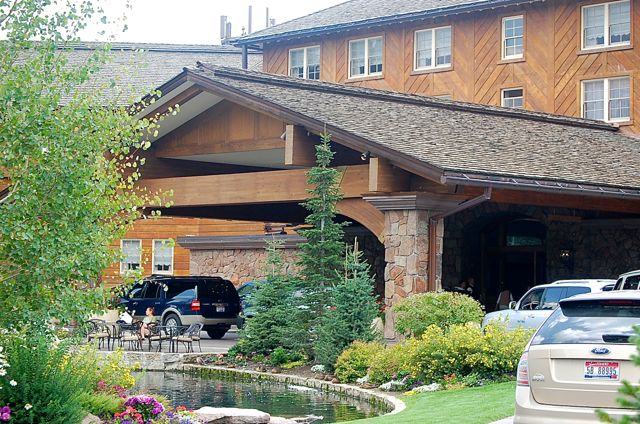
Big changes planned inside
The Lodge will renovate every room, except one, expanding them to accommodate fireplaces, and updated bathrooms which will include Jacuzzi tubs and modern amenities.
The truth is the renovation is long overdue. While the Lodge, which bills itself as America’s first destination ski resort, is the priciest in the Ketchum-Sun Valley area, it fares poorly when compared to many budget priced hotel rooms. Where rooms are larger, and bathroom space for two people often included double sinks.
The Lodge was built in 1935 by the Union Pacific Railroad and has only had three owners. It’s only relatively recently that the current owner Carol Holding, who owned Sinclair Oil with her late husband Earl, made the resort and the surrounding area into a year-round destination.
The Holdings also own a number of other five-star resort properties in the Western United States
Before Mr. Holding, began marketing the location to events such as the annual Allen and Co. technology and media conference, most of the private jets at the Blaine County airport, only came during ski season. Now it’s not unusual to see folks like Arnold Schwarzenegger, Mariel Hemmingway, or tech moguls wandering downtown Ketchum year round.
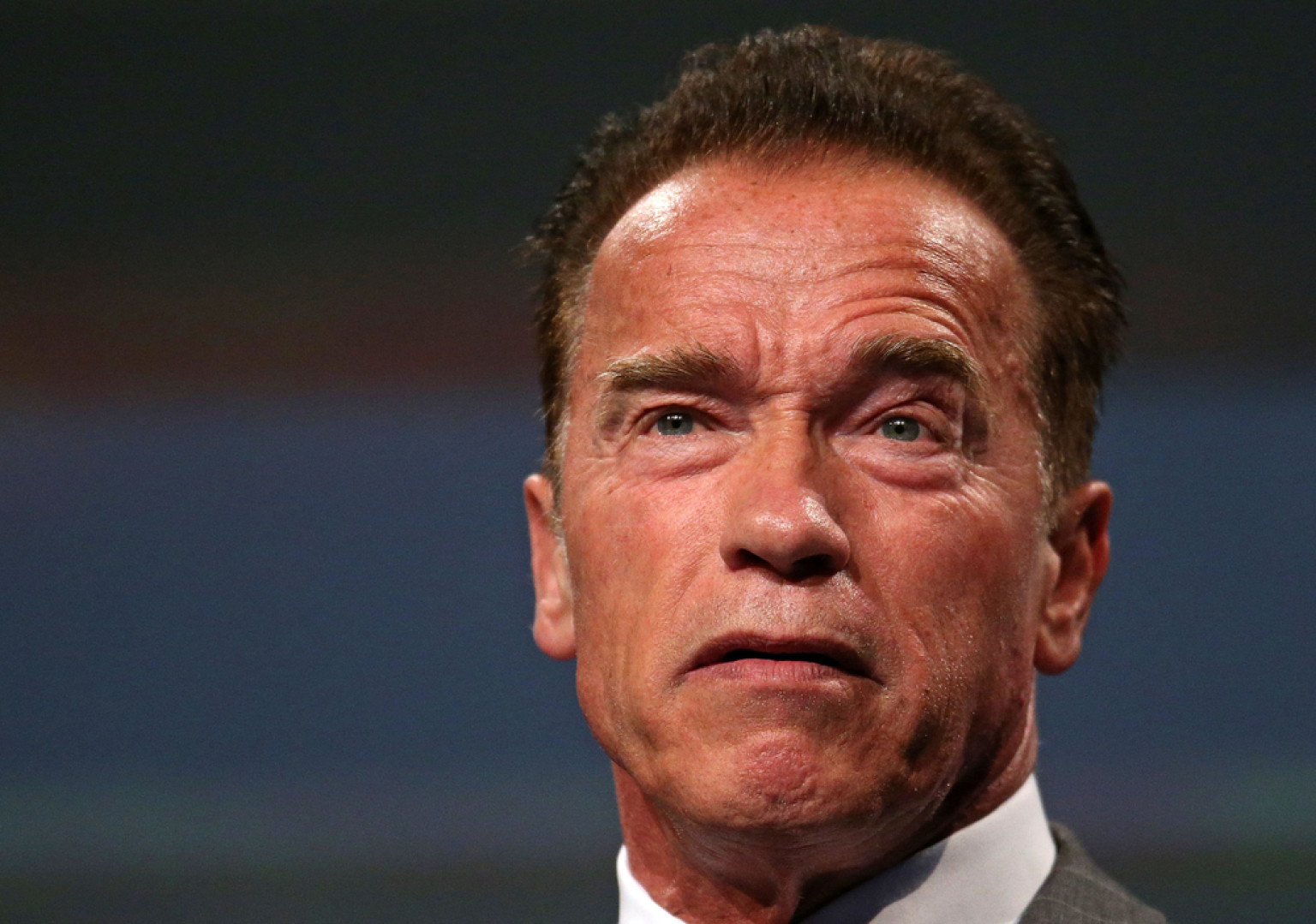
A Labor Day visitor
California’s former governor was there over the recent Labor Day weekend, with his current young honey, but that’s a story for another post.
For the last four months the Lodge has been the site of a major addition to accommodate a new spa and fitness center as well as several 4-bedroom apartment units designed for families or wedding parties.
You can find more details about the renovation at the Lodge website but you won’t be able to stay there until June of 2015 – just in time for the Allen and Company gathering.
A true sign of the year-round nature of the Lodge business, is the fact that they are closing for the what used to be high-season for The Valley ski industry.
Until next summer, you can stay at the Sun Valley Inn, the sister hotel barely 100 yards away, or at any of the many condominiums managed by the Lodge.
In general, locals are thrilled and seem genuinely happy that a new generation of the Holding family is taking an active interest in managing the mini-empire. Carol Holding, is in her 80’s, and has been largely a ceremonial leader since her husband died in 2013 but her son, Stephen, has apparently taken over and as the press release says, wants to guarantee another 75 years of ownership.
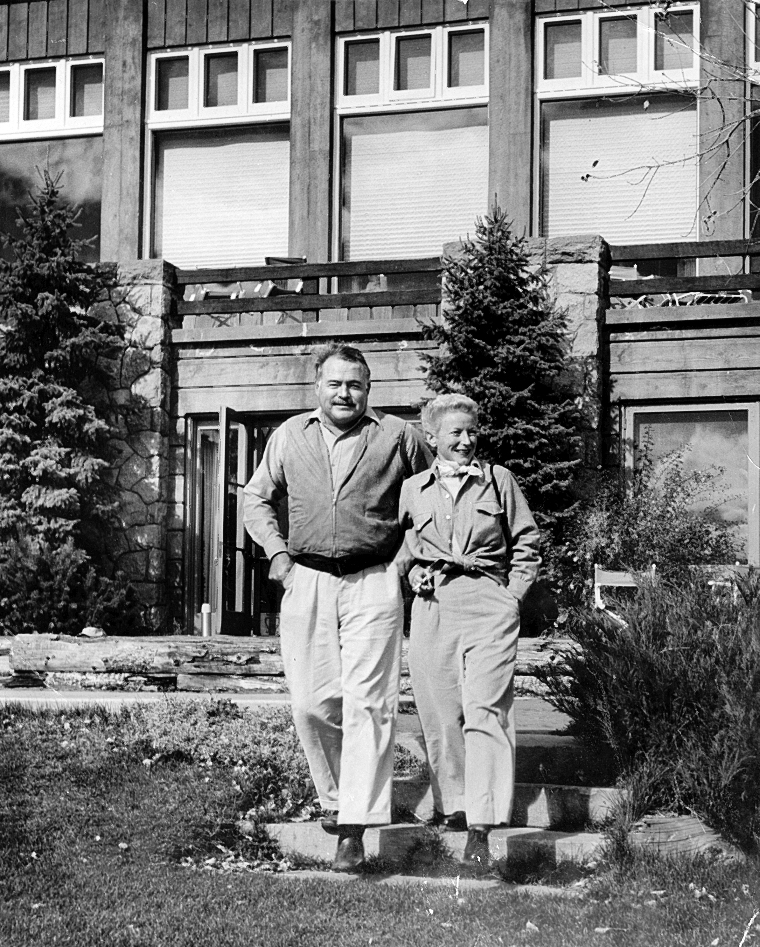
Ernest and Mary Hemingway
By the way, that lone room that will not be renovated? You guessed it – room 206, which hosted Ernest Hemingway and his lover in 1939, as ‘Papa’ finished “For Whom the Bell Tolls.” Current hotel employees say the room has never been fully renovated and includes the original claw-foot tub- and can still be rented – although the plumbing apparently clogs frequently.
But the isolated cabin, where Hemingway lived during his Sun Valley years, and where he died, is on private land and not open to the public.
If my wife and I probably win the lottery by next year- we’ll be able to afford the rates at the new Lodge, since the area is truly a beautiful destination any time of the year and we look forward to returning for the annual Sun Valley Wellness Festival next May.
What’s Wrong with Mr. Obama?
July 6, 2014
Recently Peggy Noonan at the WSJ wondered how President Obama could have failed so badly, at least according to a recent poll.
I couldn’t help wondering what was so bad about our foreign and domestic policy.
Exactly what part of our foreign policy is a disaster?
Getting Away, Southwest Style
July 16, 2013
By now most of us are pretty bored with stories pointing out bad customer service on airlines. But sometimes they can lead to a valuable management lesson. At least I hope so, and if not I’m sure I’ll feel better anyway.
Recently, I was traveling from Boise, Idaho to Oakland, California on Southwest. Plane was scheduled to leave at 6:50 p.m. and was, of course, the last flight out to the Bay Area that day.
Unexpectedly I arrived early, only to find that the flight was ‘delayed slightly’ according to the agent at the ticket counter. So, 6:50 departure, became 7:05, then 7:30 and then 7:55 and then 8:30. By now it was 6:00 and the gate area was filled with folks waiting for a gate agent to see if their connections would be O.K. One traveler even unsuccessfully called the airport paging service to ask that an agent come down to the gate area.
Around the time we should have been boarding, an agent finally shows up and promptly walks away to use the rest room. O.k, so nature calls, it happens. Of course, when she returns she is inundated with passengers wanting to know what to do about their connections.
Her first act is to get on the PA system and say, “Look, I really don’t know what’s going on, and until I do, I don’t have any answers. These things happen all the time, but the more you people stand up here asking me questions the longer it will take me to sort this out, so please do not come to the desk area.”
Two hundred shocked passengers retreated in fear.
But, here’s my point. Southwest knew the flight was delayed when they sent her to the gate, don’t you think she should have known what was coming and possibly checked out the situation before she got to the desk?
Flight delays may happen to her all the time, but to most of the ticket holders in the waiting area, it was just a bit more stress they didn’t need.
Eventually, it all got sorted out and people were rerouted and booked on flights the next day…and we made it back to the Bay Area 2.5 hours late. But it sure seems like a manager might have suggested she show up prepared, so that she wouldn’t be treating her paying customers like third graders waiting for recess.
Certainly made me an ex-Southwest customer.
Who am I?
June 21, 2013
As many of my twitter followers (@eariess) may know I appear on a weekly radio show in Sonoma, CA. As the newest member of the cast, they (Jim and Rick) decided to investigate the interloper (me) for their listeners.
But I also wrote a short note for the hosts newsletter, which I thought I’d reproduce here. (My nickname is Ace–don’t ask why, it’s a long story):
Jim, Rick,
Thanks for the chance to talk to the good folks of Sonoma.
Of course, on the way home, I thought of all the stuff I should have said:
Who is ace?
I am a husband devoted to the love of my life- the Queen- the world’s first Concierge Wellness Consultant
I am a step-dad to two women, who despite my meddling in 10 years of their life, turned out pretty well.
I am, and will forever be, a journalist, newsman and writer, even if I never write the great American novel.
I am a coach who takes pride in helping my clients find the path they want.
I am a photographer, although digital imaging, as it’s called today, will never have the same ring.
I am a gardener, who takes pride in my 100 roses, and the beauty I try to bring to the world.
I am my father’s son, and hope that they have a radio up where he is, so he can listen to me and my good friends entertain a small corner of California.
Thanks,
Ace
You can download the podcast to the show –part 1, the first hour or part 2 ,the second hour.
BTW: The weekly newsletter is worth reading, so if you want to receive it on a regular basis, write to Thisweekinsonoma@aol.com just note that Ace suggested you sign up.
So, Why Does the World Exist?
May 10, 2013
I admit that I started reading Jim Holt’s “Why Does the World Exist?” as penance. Many years ago, Douglas Sturm, my political theory seminar leader at Bucknell University, tried to introduce me to Plato.
Seems I never had time for the deep thinking required and I almost flunked.
So when I saw Mr. Holt’s book on several 10-best lists last year, I decided to get it another try, for Professor Sturm.
I guess it took 43 years before my brain could wrap itself around the concepts but I’m glad Mr. Holt succeeded.
I would recommend this book for anyone who wants to spend some time contemplating our world’s oldest question, but particularly journalists who get caught up in the daily routine of facts, figures and political hyperbole.
Holt’s writing is erudite, easy to read and understand but filled with concepts that most of us never consider, or try to avoid.
At the same time, like any good journalist, he examines the question posed in his title from every conceivable angle. No just as a personal essay, but by interviewing leaders in the field and then explaining what they seem to be saying.
Others have called his book a “detective story” but, like his readers, who want concrete answers, he accepts or rejects various arguments along the way. He reaches his own conclusions, which we are free to accept, or not, and manages to humanize the whole effort with references to his own life and his experience with death.
The journey is interesting, entertaining and, if Professor Sturm is reading this, enlightening. I’m finally starting to understand some of what Plato was telling us. Thanks for whetting my appetite.
Manhunt Management Decisions
April 19, 2013
You wouldn’t think the on-going manhunt in Boston would lead to bad management decisions, but it does. Many of the firms in the Boston suburbs have employees who live in the affected areas. This leads to a decision about whether or not to open.
One Lexington company put out the following statement:
“In light of the current public safety issue arising from the search for the second suspect, please your discretion as to whether you come into work or work from home. There are no warnings about Lexington specifically, but several neighboring communities have been urged to stay indoors and close their businesses. … will remain open today but please do what you feel comfortable with.”
This is a cop-out of the highest order. (excuse the pun) Employees should not even have to make the decision. The company, if it’s really worried about the safety of employees, should just close up for the day.
Why force your employees to make a tough decision and worry about whether they will be docked for a day’s pay. Why create an artificial division between those who ‘made it in’ and those who felt better staying home – whether they were in the affected area or not.
This is just bad management from a firm which seems more concerned with it’s own liability than its employees.
A Good Book Undone
December 24, 2012
Politics has undermined a look of good things in this country recently, but I never thought I’d accuse it of ruining a perfectly good book.
I guess it’s not the politics, but rather author David Brooks, who I should blame for my disappointment in his exploration of what he calls our ‘revolution in consciousness.’
Brooks attempts to meld fiction and science by explaining advances in neuroscience, genetics, psychology, sociology and economics through the real lives of two fictional characters. He follows them from conception to death explaining to us what’s really going on both consciously and sub-consciously.
Anyone who has read the current literature on neuro-psychology, behavioral economics or social theory will be familiar with the concepts, but Brooks does a nice job of translating the theories into real life.
Brooks, who is a New York Times columnist, write in a clear and linear style like may journalists, and his work is both believable and entertaining.
His biggest problem is his detour into politics. While Brooks is known for his conservative views, they are not the problem. My issue is with the method. The female character Brooks creates overcomes a poor childhood to excel in school and career. There is no inkling that she has slightest interest in politics but then suddenly at the height of her corporate career, she is named the head of a national presidential campaign, which lands her a job in the White House. Her husband takes a job in a Washington ‘think tank’ and becomes the mouthpiece for Brook’s views about governing, politics and the American political system.
Just in case you weren’t sure what he was doing, the charcater emphasizes that the only person who agrees with him is an ‘unnamed’ New York Times columnist.
The whole chapter seems contrived and out of place and detracts from the excellent work Brooks does to bring both his characters and scientific theory to life.
Despite this flaw Brooks work is very readable and is an easily understandable look at the science. Especially outstanding is his look at death and dying on the final pages.
So, you can skip chapters 19 and 20 if you don’t want to let politics ruin a good read, but certainly the other 20 chapters are well worth your time.